NAD+: definition, role, benefits, and link to longevity
NAD+ is a vital coenzyme found in all our cells. It supports energy production, DNA repair, mitochondrial function, and contributes to healthy aging.
As we age, its levels decline, which can result in fatigue, cognitive decline, and increased vulnerability to chronic diseases.
Discover our page on NAD+ therapies (IV Therapy), available at home in Switzerland.
What is NAD+ ?
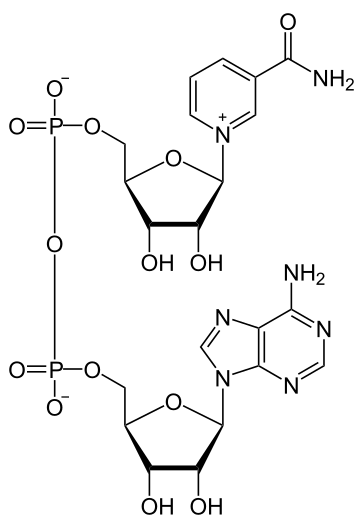
NAD+ (nicotinamide adenine dinucleotide) is a universal coenzyme involved in hundreds of metabolic reactions. Without NAD+, ATP production and cellular homeostasis cannot be maintained.
Key mechanisms:
- Electron transport in cellular respiration (NAD+ → NADH), essential for oxidative phosphorylation and ATP synthesis.
- Longevity regulation: substrate for sirtuins (gene expression, cellular stress response) and PARP (DNA repair).
- Immune signaling via CD38 and maintenance of mitochondrial redox balance.
In practice, NAD+ directly connects energy metabolism, cellular repair, and resistance to aging.
The physiological roles of NAD+
Beyond its definition, NAD+ is involved in essential cellular mechanisms that determine our health and longevity.
A sustained imbalance in NAD+ metabolism can disrupt physiological functions and lead to diseases such as metabolic disorders, cancer, premature aging, and neurodegenerative conditions.
Here are the main areas where its action is critical:
Cellular energy production (ATP)
NAD+ acts as a cellular “battery.” It captures and transports electrons during metabolic reactions, enabling the production of ATP, the body’s primary energy source.
During glycolysis and the Krebs cycle, NAD+ is reduced to NADH, which then feeds the mitochondrial respiratory chain and oxidative phosphorylation. This process results in the synthesis of large amounts of ATP.
DNA repair and protection
NAD+ is essential for DNA repair. It serves as a substrate for PARP, an enzyme activated during DNA breaks. At the same time, it activates sirtuins, which regulate gene expression and contribute to longevity mechanisms.
Low levels of NAD+ lead to an accumulation of genetic damage, promoting premature aging, cancer, and degenerative diseases.
Mitochondrial function and oxidative stress
The mitochondria are the “powerhouses” of our cells. NAD+ acts directly by supporting cellular respiration and regulating oxidative stress.
Studies show that increasing NAD+ stimulates mitochondrial biogenesis and activates protective pathways such as PGC1α and sirtuins.
Immune function and neuroprotection
NAD+ also plays a role in immune signaling and the proper functioning of the nervous system. It influences neurotransmitter release and helps protect neurons against oxidative stress.
Decline in NAD+ with age
NAD+ is constantly consumed by all physical and mental functions, and unfortunately, our physiological system uses up NAD+ faster than it can be replenished once we reach our thirties.
The aging process increases the risk of DNA damage, inflammation, and reduced mitochondrial function, which in turn negatively affects the body’s ability to produce NAD+.
On average, NAD+ levels drop by 50% between ages 40 and 60, representing the scientific trigger for the decline of many basic physiological and physical functions.

What is causing the decline of NAD?

Lifestyle choices
Various lifestyle choices can negatively impact our NAD+ levels, such as stress, poor nutrition, an imbalanced work-life schedule, and reduced or poor-quality sleep.

Substance abus
Excessive alcohol, nicotine, recreational drugs, prescription medications, or other substances reduce NAD+ levels.

Aging
Aging is most often associated with a decrease in NAD+ levels. Levels drop by half by middle age, which impacts the body’s ability to combat age-related conditions and diseases.

Chronic diseases
Chronic diseases are generally the result of mitochondrial dysfunction, which can be triggered by a decrease in NAD+ levels.
How to increase your NAD+ levels?
Natural solutions
- Diet rich in vitamin B3 (niacin, tryptophan).
- Regular physical activity.
- Restorative sleep.
- Stress management and a balanced lifestyle.
Supplements and research
NAD+ precursors such as nicotinamide riboside (NR) and nicotinamide mononucleotide (NMN) are the subject of numerous studies. They appear promising for supporting NAD+ levels, but research is still ongoing.
NAD+ infusion
NAD+ therapy via intravenous infusion is the most effective way to quickly boost NAD+ levels. It delivers NAD+ directly into the bloodstream, providing significant benefits for brain function, energy levels, and overall performance. NAD+ IV Therapy.
NAD+ and longevity: what science says
NAD+ is directly linked to aging mechanisms.
Its gradual decline leads to impaired mitochondrial function, reduced DNA repair, and dysregulation of gene expression—all factors that accelerate cellular decline.
Numerous studies confirm its central role in longevity.
➝ Shows the role of NAD+ in activating sirtuins, proteins involved in longevity and aging regulation.
Associated study: PubMed
➝ Describes how the decline of NAD+ with age disrupts communication between the nucleus and mitochondria, accelerating aging.
Associated study: PubMed – 24360282
➝ Comprehensive review of the link between NAD+, aging, and age-related diseases (neurodegenerative, metabolic, cardiovascular).
Associated study: PubMed – 29779976
➝ Highlights the importance of NAD+ in protecting against age-related neurodegenerative diseases.
Associated study: PubMed – 30586782
The scientific mechanisms of NAD+
NAD+ and glycolysis
Glycolysis is the first step in cellular energy production.
NAD+ acts as an electron acceptor during the breakdown of glucose into pyruvate, producing NADH that will then feed mitochondrial respiration.
🔬 Associated study: The NAD+/NADH ratio: linking glycolytic metabolism to transcriptional regulation
NAD+ and the Krebs cycle (linking reaction)
In the mitochondria, NAD+ captures electrons from nutrient oxidation and transfers them to the respiratory chain, thereby supporting ATP production and energy metabolism.
Associated study: NAD+ metabolism and the control of energy homeostasis: a balancing act between mitochondria and the nucleus
Electron transport chain and oxidative phosphorylation
The NADH produced in glycolysis and the Krebs cycle donates its electrons to the electron transport chain, located in the mitochondrial membrane.
These electrons drive ATP synthase, which produces the majority of ATP required for cellular function.
Associated study: Mitochondrial electron transport chain, NAD+ metabolism, and oxidative stress
The redox reaction of NAD+
The NAD+/NADH pair plays a fundamental role in redox reactions. NAD+ is the oxidized form, and NADH is the reduced form. These electron exchanges are at the heart of cellular respiration, DNA repair, and the maintenance of redox balance.
Associated study: NAD+ and redox metabolism in aging and disease
Our NAD+ solutions
At Yuboost, we go beyond the scientific findings by offering two complementary solutions: a micronutrient assessment to measure your levels and create a personalized profile, and intravenous NAD+ infusions to restore your reserves and optimize your performance. By combining analysis with targeted intervention, we help you turn knowledge about NAD+ into real benefits for your health and longevity.

NAD+ Assessment (At-Home Kit)
Accurately measure your NAD+ levels and their cofactors with a quick analysis, then receive a detailed medical interpretation and personalized recommendations to optimize your performance, strengthen your defenses, and preserve cellular longevity.

Intravenous NAD+ Infusion (Intervention)
Effectively restore your NAD+ levels by improving mitochondrial health and enhancing cellular repair mechanisms to boost energy production, support mental clarity, and slow the effects of aging.
All about NAD+
What is NAD+ in simple terms?
It is a coenzyme present in all our cells, essential for energy production and DNA repair.
What are the benefits of NAD+?
Increased energy, cognitive support, anti-aging effects, physical recovery, and immune protection.
What is the difference between NAD, NADH, and NADPH?
NAD+ is the oxidized form, NADH is the reduced form, and NADPH is involved in anabolic reactions (synthesis and protection against oxidative stress).
Why do NAD+ levels decrease with age?
Natural aging, oxidative stress, DNA damage, chronic inflammation, and an unbalanced lifestyle.
Can NAD+ levels be restored?
Low NAD+ levels can be caused by deficiencies in the synthesis/salvage pathways, excessive DNA damage from free radicals or ultraviolet light, or chronic immune activation.
Activation of PARPs in the presence of excessive or accelerated DNA lesions leads to NAD+ depletion. When NAD+ levels become extremely low, adenosine triphosphate (ATP) production decreases, ATP reserves are consumed, and ultimately, cell death occurs. Increased activity of CD38 and other NAD-consuming ectoenzymes during chronic immune activation also depletes NAD+.
Declining NAD+ levels may be a major factor in aging and age-related degenerative diseases affecting the heart, brain, liver, kidneys, and skin.
How to restore NAD+ levels?
Healthy lifestyle (sleep, nutrition, exercise), supplements (NR, NMN), and especially NAD+ IV infusions.
For more information, contact us at info@yuboost.com
Discover how YuBoost has improved their daily lives

Je recommande Valiny, qui est une infirmière très douce et de bon conseil.
En résumé, équipe très compétente, très bon suivi après la perfusion 👍
Je recommande !

En résumé, équipe très compétente, très bon suivi après la perfusion 👍
Je recommande !
Cela a amélioré mon efficacité au travail et ma concentration!
Merci à Valiny pour son accompagnement chaleureux et professionnalisme 😄
Cela a amélioré mon efficacité au travail et ma concentration!
Merci à Valiny pour son accompagnement chaleureux et professionnalisme 😄
Yuboost comes straight to your door and offers a variety of IV drips, made me feel like new in no time.

DR. ALEXANDRA MILES
Your health and well-being are our top priorities. We’re here to support you every step of the way, providing not only quality care but also the support and advice you need to feel your best.


Natural solutions
Supplements and research